
Watch the Movement, Not the Money
The first capital campaign I ever ran taught me to distrust the number everyone else was happy about.
We were a few months in. I brought the report to a campaign committee meeting, and the total was up. A good month, the kind that makes a board chair nod and move to the next item. People were pleased. I sat there running the math while the meeting moved on, because I knew something the number didn't show: nothing had actually moved that month. The figure was three asks from the spring all closing inside the same four weeks. I'd made those asks months earlier. They'd simply happened to land together.
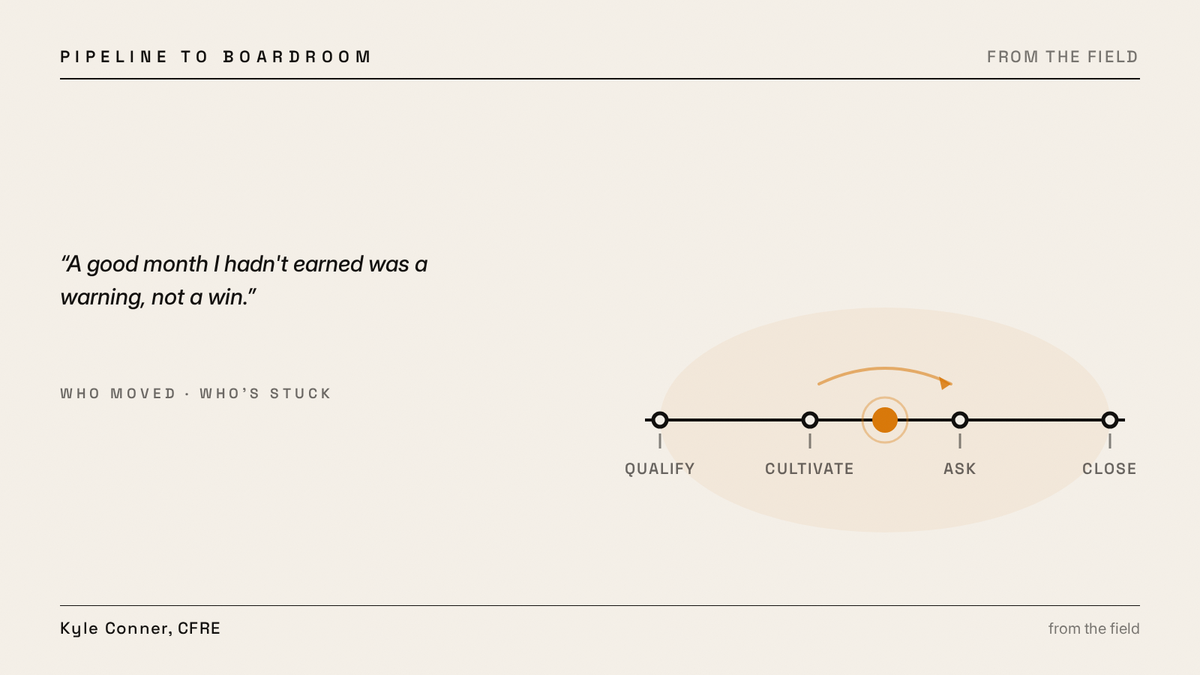
Nobody else in the room saw a problem. Why would they. The report I handed them showed one number, and it was up. That was the part I hadn't worked out yet: I was giving the board a total, not a pipeline, so the only person who could see the campaign going quiet was me. I was running my first campaign, and I couldn't shake the feeling that a good month I hadn't earned that month was a warning, not a win.
It was. The next stretch went quiet, the way it does after you harvest everything at once and plant nothing behind it.
Dollars raised is the number that tells you the least
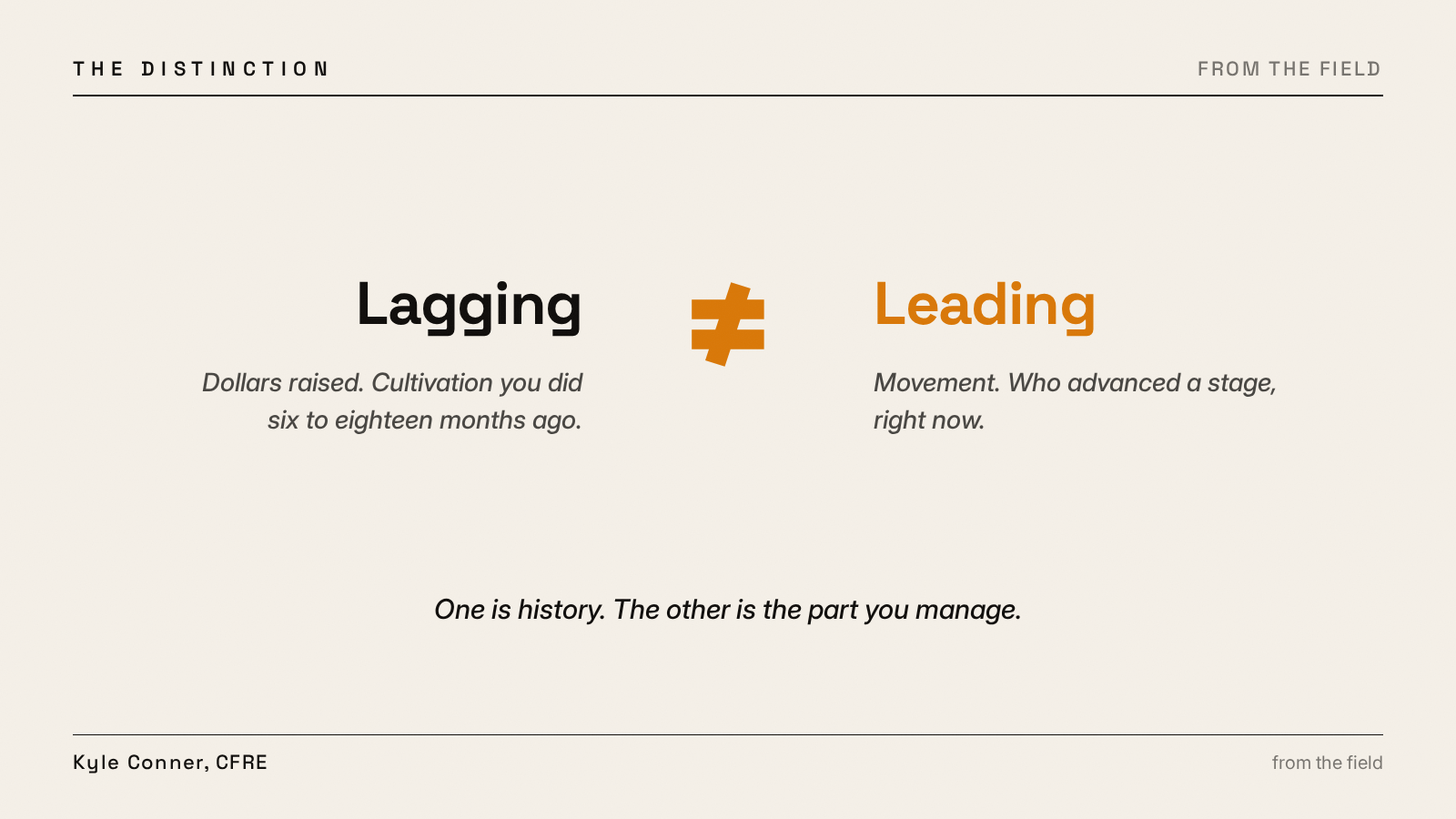
That's the lesson I almost walked past. Dollars raised feels like the score. It's actually a lagging indicator: cultivation you did six to eighteen months ago, dressed up as a current result. The check that lands in July was set in motion last winter. By the time it hits the board report, the work that produced it is finished, and the work that decides next year is either happening or it isn't. The monthly total can't see that part either way.
What predicts next year is movement
How many prospects advanced a stage. Qualification to cultivation. Cultivation to a real ask. If donors are moving through the pipeline, revenue is coming whether or not this month's total looks good. And if nobody's moving, a strong month is just timing, with a cliff somewhere ahead of you that the number won't show.
After that campaign, I built every pipeline review I ran around one question. Not "what did we close." Who moved, and who's stuck.
A stalled prospect is a problem you can still fix in week two. You make the call, or you bring in the board member who actually knows them. A missed number is a different animal. In month six, at a finance committee meeting, you find that one out, when the only move left is to explain it.
Boards love the dollar figure because it's simple
One line. It goes up or down. Anyone in the room reads it in a second.
But it's also the thing you can least control in any given month. A single delayed gift swings it. So does a foundation's payout schedule, or a donor whose own timing you had no vote in. You can do everything right in July and still post a soft July. You can coast for a month and post a great one because three spring asks all happened to close at once. Which is exactly the trap I'd walked into.
The dollar figure rewards and punishes you for things that already happened. Movement is the part you're managing right now.
Where this breaks down
Movement can be gamed, and you should watch for it. A prospect who "advanced to cultivation" on the strength of one warm lunch is not the same as one who's read the proposal and told you when they plan to decide. Stage counts without discipline turn into their own vanity number: the pipeline version of counting likes.
The fix isn't to stop tracking movement. It's to define each stage by something the donor did, not something you hoped they felt. A meeting booked. A question about the gift agreement that means they actually opened it. Track the evidence, not the optimism.
What I watch first
Before I look at what closed, I look at who moved and who didn't. The stalls get worked first, because a stall in week two is still a live conversation. The closes mostly handle themselves. They're downstream of movement that already happened.
That first campaign closed, in the end. But I stopped trusting good months I hadn't earned. I started running the pipeline off movement instead of totals, and I started putting that movement in front of the board, so the health of the campaign wasn't something only I could see. The number on the board report never told me what was coming. The movement underneath it always did.
Watch the movement. The money is downstream of it.
Fundraisers: what's the leading indicator you actually manage to, beyond dollars in the door?